Fun and simple beginnings
The micro-internship programme gradually introduced a variety of environmental issues that scientists must tackle nowadays. The students engaged in amusing mix-and-match games to find which type of science corresponded to the scientists: is it about plants, animals, soil, or water? It was for them to find out. For the students and I included, this was an exciting experience: to see those brilliant Black heritage scientists from different countries was inspiring. A reminder for every student that they belong in every space, and specifically in the scientific community.
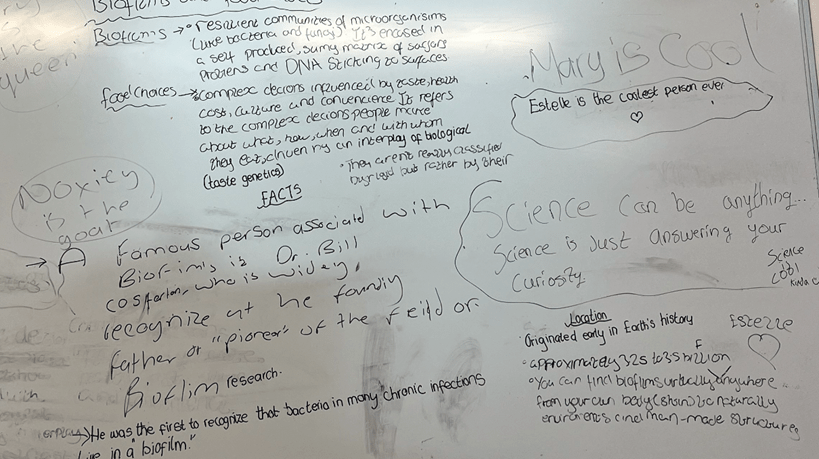
In a playful and relaxed atmosphere, they started brainstorming and thinking about what it is they are faced with. With a focus on biofilms, my group of students prepared questions to explore their topic in more detail. All of them were new to this topic but seemed curious to move forward and discover more about what this project entails. That wave of excitement and playfulness was needed to set out the tone for a more serious conversation with Black heritage professionals.
Creativity and science: a learning curve for students
Week after week, the students gave up the amusement and started focusing on the science element and the learning opportunity. Regular meetings with their supervisors helped them focus on the importance of the task. In these moments, they had to be responsible for their own research because they realised it involved a scientist who was helping them exploring their topic and understanding what it is all about.
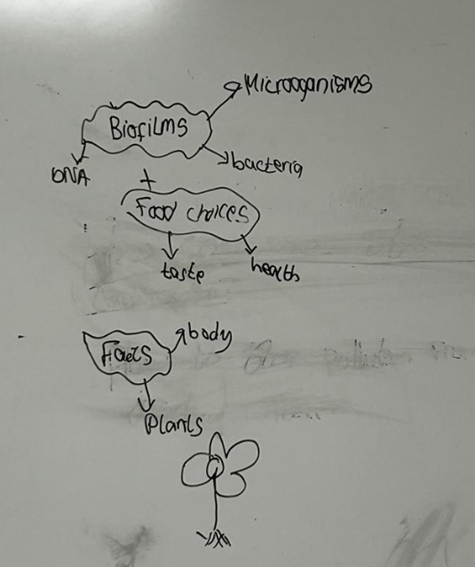
Each member demonstrated their interest in different ways: some took initiative by researching ahead of time, while others excelled at summarizing key information during meetings. Throughout the project, there was clear growth and deepening engagement. The students drew inspiration from the programme, channelling their creativity and enthusiasm into their assigned topics through expressive drawings and engaging presentations for other groups. This experience was a learning journey for our team as well. I discovered fascinating insights about biofilms, a subject I might never have encountered otherwise. Witnessing Black scientists, including remarkable Black women, teach these topics was profoundly inspiring. The students also learned more about one another, recognizing each person’s strengths and building bonds through collaboration. Exploring the science department’s corridors reinforced a powerful message: they truly belong in this field. This micro-internship marks the start of their scientific enlightenment and the potential launch of their future careers.
– Pierre-Angela
 B-HUGs a social change project
Leave a comment